
At AID India, we believe that true development isn’t about temporary relief, but about providing the tools for long-term dignity. This is the heart of Grama Vasantham, which in Tamil translates to “Village Prosperity.” The name reflects a social “springtime,” a collective rebirth for those once sidelined by the traditional economy.
Roots of Change: The Vision of Muhammad Yunus
Launched in 2000 and inspired by the revolutionary Grameen Bank model, Grama Vasantham was designed to break the cycle of poverty in the most marginalised areas of Tamil Nadu. Our General Secretary, Peter Raj, brought this vision to life after training in Bangladesh with Nobel Laureate Muhammad Yunus, focusing on those most excluded: women from marginalised commmunities, people with disabilities, and religious minorities.
In rural South India, where drought and precarious agricultural work often force families into the hands of predatory moneylenders (with interest rates reaching a staggering 120%), Grama Vasantham offers a real way out. The model is based on Self-Help Groups (SHGs) of 15 to 20 people from the same village who save together, learn together, and grow together.
Before any money is exchanged, members receive extensive tutoring on basic accountancy, savings management, and loan procedures. For many women, this phase also includes fundamental literacy. Learning to read, write, and sign their own names instead of using a thumbprint is the first crucial step towards personal empowerment.
By 2007, the programme had already reached over 6,000 beneficiaries. We still remember stories like Arumugam’s, a widow who, through a small loan, started a mat-weaving business that transformed her from a survivor into a respected entrepreneur.
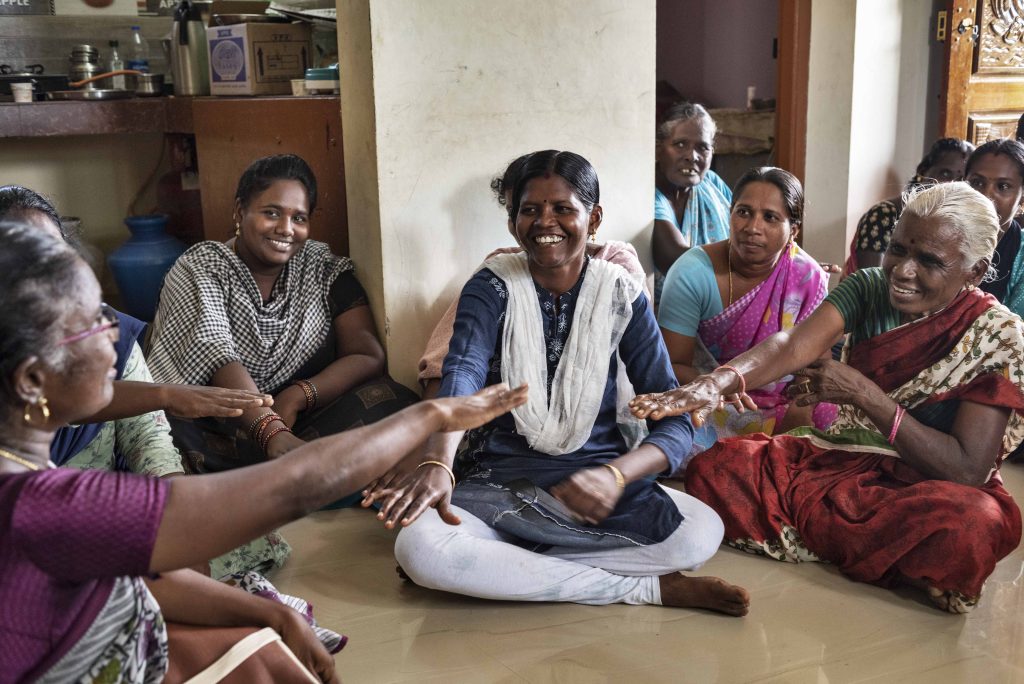
The SHGs Today: A True Village Prosperity
Visiting our villages recently, the evolution of this project is striking. What began as a guided credit programme has become a fully autonomous financial ecosystem.
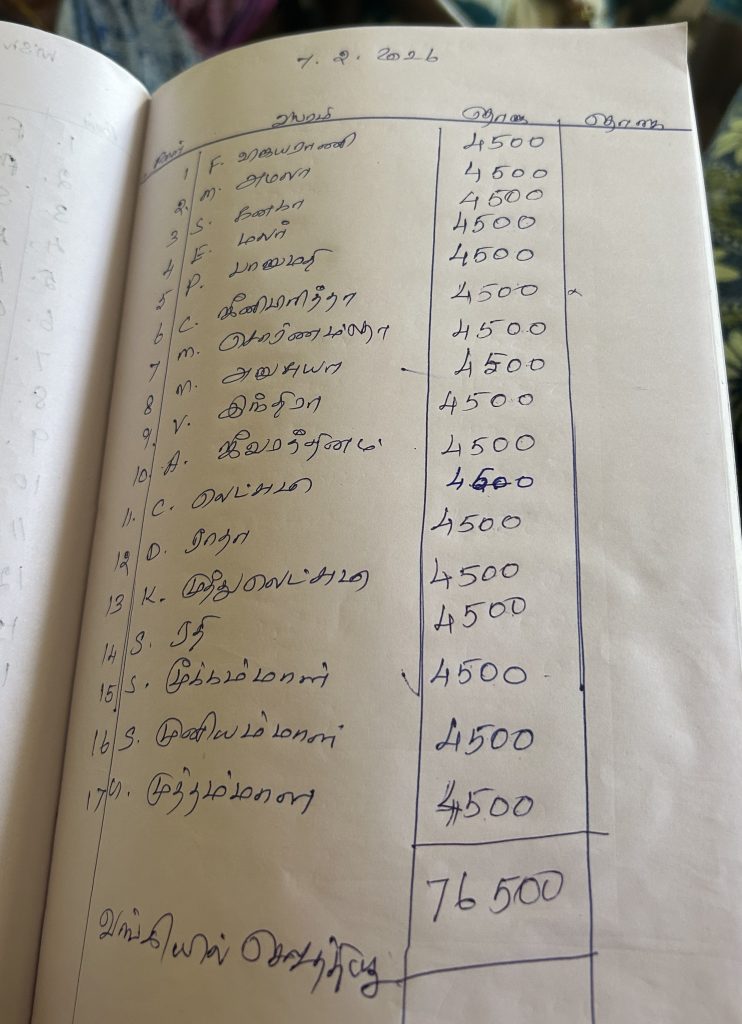
Each month, members contribute a small saving (typically 500 rupees) to a common fund. This “community chest” is used for internal loans, and the interest generated stays within the group. These women manage their finances so skilfully that, every single month, they successfully repay their loan principal and interest, while still managing to set extra money aside to keep the common fund growing. It is a system built on radical transparency, often recorded by hand in ledgers that track every single rupee.
Today, the empowerment extends far beyond the village borders. Women who once needed our assistance for basic accountancy now confidently walk into commercial banks to apply for formal loans. They navigate the official banking system entirely independently, without the need for external guarantors, because they have proven their financial reliability. Some have become so experienced that they now act as mentors, teaching new SHGs how the credit system works.
The impact is visible in every corner:
- The Nilla Group: They have already cleared their first major debt and are now financing their second round of agricultural projects. “We feel proud to do this without depending on men,” they shared.
- The Sakhti (“Strength”) Group: Here, the focus is on livestock. One member now owns four cows, selling milk to local collection centres. In a region where the cost of living is low, these individual businesses provide a significant safety net.
- The Next Generation: We met Mugildevi, 29, one of our younger members. While she is still deciding on her specific business path, she is already an active part of the monthly collection, viewing financial literacy as a basic right for her future.
A Model of Shared Responsibility
One of the most interesting developments is the “ripple effect” on the local men. While historically it has been difficult to maintain long-term financial discipline in men-only groups, one specific men’s group is currently thriving.
The secret to their success? As the women shared with a laugh, it is the strict oversight of the female SHG members. By managing the funds and ensuring that savings are prioritised over non-essential expenses, the women have turned this into a successful community-wide model of accountability.
Beyond Microcredit: Investing in Life
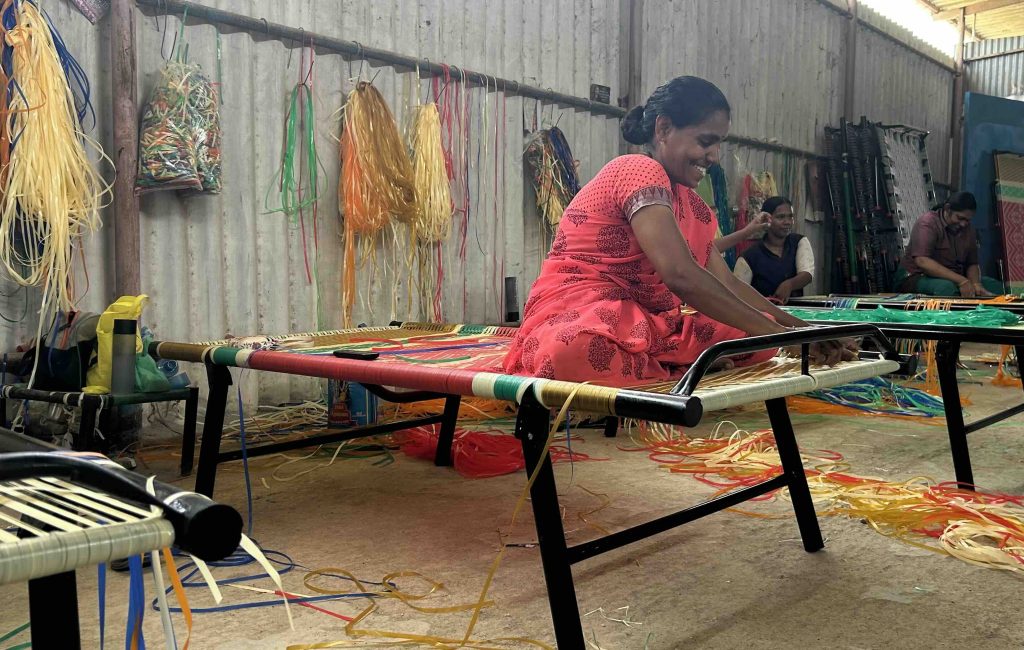
The funds aren’t just for business; they are for life. When a group decides to distribute a portion of their profits, the money is almost always reinvested into children’s education, home repairs, or emergency healthcare. We also see thriving micro-industries, such as the production of net-beds. While wholesalers often take a large cut, our members are earning steady weekly wages (about 140 rupees per bed), ensuring they never have to mortgage their homes or face the threat of violence from local usurers again.
The Path Ahead
Grama Vasantham has proven that when you replace exploitation with trust and collective responsibility, a village doesn’t just survive, it thrives. Today, these women are tailors, dairy farmers, and the architects of their own destiny.
For our volunteers and partners, this is what your support builds: not a one-time donation, but a lifetime of independence. Whether through a contribution to our local bank account (for Indian residents) or our international bank account (for supporters abroad), you can directly support these women in shaping their future.